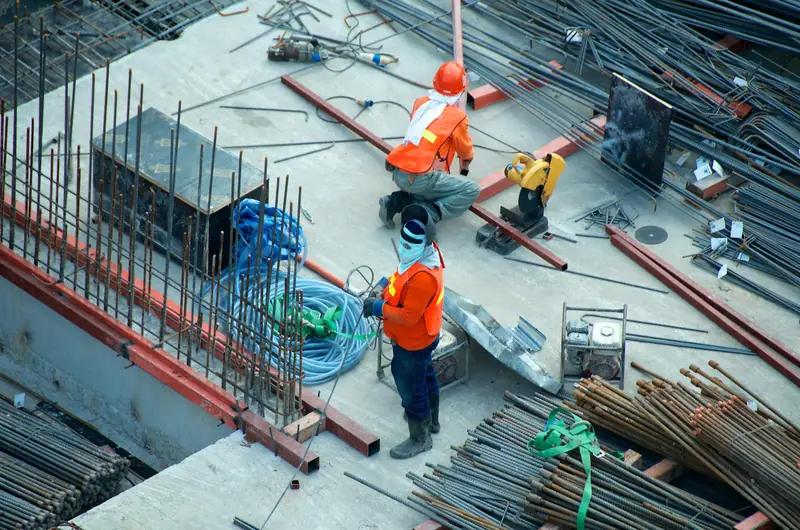
Lifting Operations and Crane Safety Management
Lifting operations combine heavy loads, complex equipment, and multiple people working in close coordination. This course covers the planning and supervision of safe lifting, from routine tasks to complex tandem lifts. Delegates study equipment selection, inspection, and the roles of the lifting team.
Course outline
What this programme covers, module by module.
- 01Planning lifts from routine tasks to complex tandem lifts
- 02Selecting cranes, slings, and lifting accessories for the load
- 03Verifying inspection and certification of lifting equipment
- 04Assigning appointed person, slinger, and operator roles
- 05Assessing ground bearing capacity and load stability
- 06Supervising lifts and enforcing exclusion zones
- 07Reading load charts and centre of gravity
What you will gain
- Plan lifting operations to the appropriate level
- Select cranes, slings, and lifting accessories
- Verify inspection and certification of equipment
- Assign competent roles within the lifting team
- Assess ground conditions and load stability
- Supervise lifts and manage exclusion zones
Who should attend
- Lifting supervisors and appointed persons
- Riggers and crane operators
- Project and site engineers
- HSE officers
Upcoming sessions
| Date | City | Duration | Fees | Book |
|---|---|---|---|---|
| 9 to 13 Nov 2026 | Johannesburg | 5 Days | R18,000 | |
| 23 to 27 Nov 2026 | London | 5 Days | US$1,800 | |
| 11 to 15 Jan 2027 | Dubai | 5 Days | US$1,800 | |
| 15 to 19 Feb 2027 | Durban | 5 Days | R18,000 | |
| 3 to 7 May 2027 | Cape Town | 5 Days | R18,000 | |
| 12 to 16 Jul 2027 | Johannesburg | 5 Days | R18,000 |
Fees are per delegate and exclude VAT. Public intakes are confirmed once minimum numbers are met. We also deliver this course on your own schedule, in-house or live online.
Enquire about this course
Register your team or ask for a tailored in-house quote. We reply within one working day.
WhatsApp usCourse brochure (PDF)- Fees from
- R18,000 per delegate
- Duration
- 5 Days
- Field
- Health, Safety & Environment
- Formats
- In-house, public, online
More in Health, Safety & Environment

Process Safety Management Fundamentals
This course examines the systematic approach used to prevent major accidents involving hazardous chemicals and processes. Participants study the core elements of a process safety programme, from hazard identification through to mechanical integrity and emergency response. The programme draws on recognised frameworks and real incident case studies to build practical competence.
Incident Investigation and Root Cause Analysis
Effective investigation turns a workplace incident into a lasting improvement rather than a repeated failure. This course teaches structured techniques for gathering evidence, reconstructing events, and identifying the underlying causes of accidents and near misses. Delegates practise interviewing, timeline building, and the development of corrective actions that address system weaknesses.

Behaviour Based Safety Programme Design
Many injuries trace back to at risk behaviours that safety systems alone cannot control. This course shows how to design and run a behaviour based safety observation programme that reinforces safe habits and reduces incidents. Participants learn to define target behaviours, train observers, and use feedback to shift workplace culture.